

Reliable standard instrument designed to measure fluid pressures, including ground water elevations and pore pressures. Ideal for installation inside grouted or open boreholes, observation wells, and standard piezometer riser pipes; also suitable for burying directly in embankments and fills. Includes a built-in thermistor for temperature measurement.
Grouted boreholes, observation wells, riser pipes, direct burial in embankments and fills
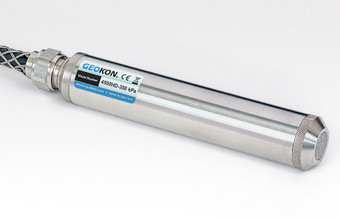
Designed for direct burial in fills and dam embankments, built to withstand earth movements during construction and used with heavily armored cable. Recommended for earth dams and can measure ranges up to 20 MPa.
Direct burial monitoring in fills and dam/earth embankments; high-pressure monitoring

Specifically designed for precise measurements of very low fluid pressure. Suitable for measuring groundwater elevations in wells and water levels in streams, weirs, and flumes. Sensitivity allows changes in water levels as little as 0.2 mm to be measured.
Very low pressure monitoring: groundwater elevations (wells); water level measurement (streams, weirs, flumes)

Designed for monitoring downhole pressures and temperatures in oil recovery systems and geothermal applications. Withstands temperatures as high as 250°C. Available with mineral insulated cables or tubular encapsulated cables (TEC), sheathed in stainless steel tube for durability.
Downhole pressure & temperature monitoring (oil recovery systems; geothermal applications)

Designed for chemically aggressive environments such as mine tailings, leach pads, and marine applications. Constructed using materials highly resistant to corrosion to withstand harsh conditions and provide accurate measurements.
Chemically aggressive environments: mine tailings; leach pads; marine applications

Durable tool for monitoring soil pressure and water levels, with a transducer inside a sturdy housing with an EW drill rod thread and removable pointed nose cone. Particularly suited for peat and soft clays and can be recovered at the end of the job; models with metric threads are available for installation using conventional cone penetrometer.
Soil pressure & water level monitoring (particularly peat and soft clays)

In addition, we have a vast selection of HDPE casings, screens, pipes, and fittings. Our products also include lifting bails and swivels for easy installation.
In addition, we have a vast selection of HDPE casings, screens, pipes, and fittings. Our products also include lifting bails and swivels for easy installation.

In addition, we have a vast selection of HDPE casings, screens, pipes, and fittings. Our products also include lifting bails and swivels for easy installation.
In addition, we have a vast selection of HDPE casings, screens, pipes, and fittings. Our products also include lifting bails and swivels for easy installation.

In addition, we have a vast selection of HDPE casings, screens, pipes, and fittings. Our products also include lifting bails and swivels for easy installation.
In addition, we have a vast selection of HDPE casings, screens, pipes, and fittings. Our products also include lifting bails and swivels for easy installation.


In addition, we have a vast selection of HDPE casings, screens, pipes, and fittings. Our products also include lifting bails and swivels for easy installation.
In addition, we have a vast selection of HDPE casings, screens, pipes, and fittings. Our products also include lifting bails and swivels for easy installation.

The Rod Type Borehole Extensometer is designed with precision measurement rods that link internal sensors within the extensometer head to anchors placed at specific depths within a borehole. As the anchors move relative to the head, which is securely fixed at the borehole entrance, the device provides critical data on the magnitude of displacement occurring between the anchor points.
Subsurface displacement measurement; Borehole deformation monitoring; Rock mass movement analysis; Tunnel convergence assessment; Foundation and excavation monitoring; Dam and embankment performance evaluation

Telltales are designed to accurately measure the load transfer pattern in piles, drilled shafts, and tieback anchors. They are also valuable for gathering data on pile tip movements and deflections along the pile length.
accurately measure the load transfer pattern in piles, drilled shafts, and tieback anchors

The Tape Extensometer is engineered to measure small variations in the distance between opposing walls, or between the roof and floor of excavations, tunnels, or mine openings. It is also effective for monitoring structural deformation, support movement, and tracking shifts in unstable slopes.
measure small variations in the distance between opposing walls, or between the roof and floor of excavations, tunnels, or mine openings; monitoring structural deformation, support movement, and tracking shifts in unstable slopes

The Dial Indicator provides a quick and straightforward method for reading borehole extensometers. It offers a high level of precision with an accuracy of 0.01 mm and a standard range of 50 mm.
Manual borehole extensometer readout; Short-term deformation measurement; Construction-phase monitoring; Commissioning and verification checks
The Depth Micrometer delivers accurate readout of borehole extensometers via a digital counter, following manual adjustment of the thimble. It features 0.01 mm accuracy with a range of 25 mm, extendable to 150 mm using the included extension rods.
High-precision borehole extensometer readout; Manual displacement measurement; Construction and verification monitoring; Periodic deformation surveys
DC-DC LVDTs are designed for dynamic and high-temperature environments. They come with standard ranges of 50 mm, 100 mm, and 150 mm, with other ranges available upon request.
Dynamic displacement measurement; High-temperature deformation monitoring; Structural movement monitoring; Laboratory and field testing applications

The Linear Potentiometer is built with a durable 6.5 mm diameter rod, extending from both ends to serve as an actuating shaft. This design allows for easy connection to extensometer rods and enables a manual mechanical check of the readings.
Mechanical displacement measurement; Manual extensometer verification; Structural movement monitoring; Laboratory calibration and testing

The Vibrating Wire Displacement Transducer offers remote readout for GE Monitoring Systems Extensometers. It is particularly advantageous when used with other VW sensors or in situations requiring long cable runs.
Remote displacement monitoring; Long-cable extensometer installations; Integrated vibrating wire monitoring systems; Automated and long-term deformation monitoring

The Vibrating Wire Load Cell is constructed from high-strength steel with 3, 4, or 6 vibrating wire strain gauges arranged around its circumference. These gauges measure loads applied to the cell and reduce the effects of uneven or eccentric loading by averaging the readings from all gauges.
long-term monitoring in geotechnical and structural applications

This Load Cell features an annular design made from high-strength steel or aluminum and utilizes electrical resistance strain gauges configured in a Wheatstone Bridge. Primarily used for tiebacks, rockbolts, and pile load tests, it offers excellent sensitivity for short-term or dynamic monitoring applications.
applications where rapid or dynamic load changes need to be captured, such as in pile load testing or when using hydraulic jacks
The Instrumented Rockbolt features a vibrating wire strain gauge embedded within a short section of standard threaded rockbolt or rebar. This section is coupled to a longer bolt, making it easy to install in the same manner as conventional rockbolts.
measure small variations in the distance between opposing walls, or between the roof and floor of excavations, tunnels, or mine openings; monitoring structural deformation, support movement, and tracking shifts in unstable slopes

The Dial Indicator provides a quick and straightforward method for reading borehole extensometers. It offers a high level of precision with an accuracy of 0.01 mm and a standard range of 50 mm.

The Tensile Load Cell contains a vibrating wire transducer encased in a thick-walled stainless steel cylinder. This highly sensitive and stable design is ideal for monitoring tensile loads in in-line weighing systems, such as those used in weighing type rain gauges, process weighing systems, and batching plants, providing reliable load measurements in industrial applications.
monitoring tensile loads in in-line weighing systems, such as those used in weighing type rain gauges, process weighing systems, and batching plants, providing reliable load measurements in industrial applications

A digital inclinometer system featuring a MEMS inclinometer probe with reel-mounted cable and field PC for survey data collection; includes a digital compass that corrects for casing twist and Bluetooth® wireless data transfer.
Borehole inclination measurement; subsurface movement and deformation monitoring; slope/embankment stability surveys.

The Vertical IPI String consists of a series of Biaxial MEMS tilt sensors encased in durable polymer housings. With spring-loaded and fixed wheels, the string engages securely with conventional inclinometer casing grooves, ensuring accurate alignment at various depths.

This system features Biaxial MEMS tilt sensors housed within sealed stainless steel segments, cut to customer-specified lengths. The segments are connected through in-line ball joints and spring-loaded wheels, ensuring positive engagement within inclinometer casing grooves.
geotechnical and structural monitoring in a variety of applications
Designed for horizontal monitoring, this system consists of Biaxial MEMS tilt sensors housed within stainless steel tubing, customized to specified segment lengths. The segments, connected through in-line ball joints and supported by spring-loaded wheels, ensure positive engagement within vertically oriented inclinometer casing grooves.
monitoring subsurface ground movements in excavations and tunnels

The Glue-Snap ABS Inclinometer Casing provides quick and easy assembly, ideal for use with both inclinometer probes and in-place inclinometer systems. Its flush-coupled design ensures stability and reliable performance, making it an effective solution for monitoring embankments, slopes, foundation walls, and more.
use with both inclinometer probes and in-place inclinometer systems

This lightweight and durable casing is constructed from environmentally resistant pultruded fiberglass. The casing features precisely spaced wheel grooves at 90° intervals for probe alignment, and it is pop-riveted and waterproofed for secure installation.
use with all commercially available inclinometer probes, the Pultruded Fiberglass Casing is designed to monitor stability in embankments, slopes, foundations, and excavation walls, providing reliable data in various geotechnical conditions

The Tilt90-x is a versatile wireless inclinometer and data logger designed for long-term structural and geotechnical monitoring. It is ideal for a wide range of applications, including monitoring the stability of bridges, civil infrastructure, embankments, and building foundations.
Bridge and civil infrastructure monitoring; Embankments and slope stability; Building foundations and response to tunneling or excavation; Landslide-prone areas and deep excavations

The LaserTilt90 is an advanced wireless monitoring tool that combines a laser distance meter, inclinometer, and data logger in one compact unit. It is designed to measure and monitor settlement from a reference point, and can infer vertical settlement at tunnel crowns.
Settlement and displacement monitoring at tunnel crowns; Tunnel and mining convergence; Monitoring structural movement in buildings and underground excavations; Slope movement and fracture surveillance; Monitoring bearing and expansion joint movements in large structures

The Vibration Meter is a cutting-edge, wireless sensor designed to offer cost-effective, real-time monitoring of vibration levels in a wide range of applications. This highly efficient device enables near real-time assessment of vibrational behavior based on several key parameters, ensuring compliance with both local and global regulatory standards.
Construction & Geotechnical Projects: The meter can be used to monitor vibrations from pile driving, excavation, and other construction activities, ensuring that vibrations stay within permissible limits and do not affect surrounding structures; Structural Health Monitoring: The device helps monitor the integrity of buildings, bridges, tunnels, and other infrastructure by detecting excessive vibrations that could indicate structural weaknesses; Industrial Machinery Monitoring: The Vibration Meter detects abnormal vibrations in heavy machinery, turbines, and other industrial equipment, allowing for predictive maintenance and preventing costly breakdowns; Mining & Blasting: It provides real-time feedback on vibrations caused by blasting or excavation activities, protecting sensitive equipment and nearby infrastructure from potential damage; The Loadsensing Vibration Meter is a powerful, flexible, and reliable tool designed to meet the growing demands of real-time vibration monitoring in a variety of industries, helping you ensure safety, regulatory compliance, and operational efficiency

Cement grouting; Permeability testing; Sealing boreholes/fractures in rock or concrete

Mechanical Packer for surface injections. Supplied with a hollow central tube and rubber membrane that can expand up to 10% of initial diameter; manually expanded using provided handles. Applications include grout injection into foundations through slabs.
Surface injections; Grout injection into foundations through slabs

Well testing tool with integral down-hole shut-in capability and setting tool, enabling advanced permeability testing and multiple straddle testing in one trip. Can be run on rods or through-the-bit in P and H sized wireline systems (or on rods for N size). Multi-cycle, four-stage valving mechanism; shifting between stages by axial movement only (no rotation).
Permeability testing; Hydrojacking; Hydraulic fracturing; Rock stress testing; Selective stimulation; Casing integrity testing; Caprock integrity testing
Through-the-bit wireline hydraulic packer system for permeability testing in deep and demanding core holes. Available as standard for P, H, and N sizes, in modular single/straddle formats with straddles from 1 m to 10 m (optional memory gauge carriers). SWiPS® makes testing possible where gas-inflate packers can’t be used.
Permeability (lugeon) testing for major construction projects (e.g., dams, tunnels); Hydrogeologic characterization; In situ mining; Water sampling (e.g., lithium exploration)

PVC-U casings and screens manufactured with selected PVC compounds to provide non-corrosive pipes. Two ranges available: 0–100 m standard and 100–200 m heavy duty. Features include high mechanical strength, resistance to high collapse pressures, accurately cut slots for designed flow rates, and robust threaded joints.
Waterwells; Mine dewatering; Sea water abstraction; Geotechnical drilling; Water monitoring

Full range of PVC pressure pipe and fittings (and unplasticized dark grey PVC pipe). Benefits noted include excellent flow characteristics (reduced frictional losses), strong long-term strength/cost ratio, chemical resistance (acids/alkalis), abrasion resistance, lightweight handling, and sealing ring jointing options.
Water mains and reticulation; Irrigation; Mining; Industrial applications; Sewer effluent control and water purification; Drinking water networks; Sewage systems; Sewage water mains; Conveyance of liquid foodstuffs and industrial liquids; Underground irrigation

HDPE casing and screens are used for water wells, soil monitoring, bio-gas abstraction from landfill sites, mining, and other industries. Noted benefits include lightweight, non-corrosive, non-toxic, fatigue resistance, and ease/speed of installation; preferred for soil monitoring/landfills due to resistance to aggressive chemicals. HDPE pipes suit waste and rainwater drainage and can be used from −40°C to +95°C.
Hydrocarbon monitoring; Landfill sites; Water quality monitoring; Petro Chemical monitoring